The Grenadier Forum

Register a free account today to become a member! Once signed in, you'll be able to contribute to the community by adding your own topics, posts, and connect with other members through your own private inbox! INEOS Agents, Dealers or Commercial vendors please use the contact us link at the bottom of the page.

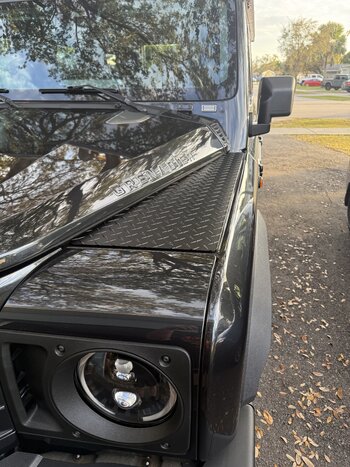
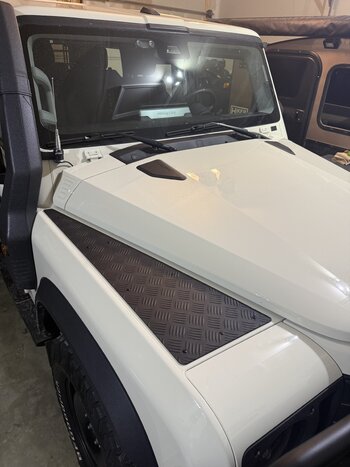
Fender / checker plate question

Stainless steel rivets with black oxide coating will retain color almost indefinitely. It is not a finish that can flake off. Painted rivets will quickly flake and black anodized aluminum rivets will slowly turn brown from UV exposure unless a UV resistant anodization was used.
 
For all I know maybe it's plastic. Just a straight up answer would be appreciated. lmao smh
Using a magnet is not a straight up answer? If a magnet is not attracted to the fender it is either aluminum, stainless steel or another material that will not be subject to corrosion. And the issue at hand is that of corrosion unless I am completely misreading the room.
 
Using a magnet is not a straight up answer? If a magnet is not attracted to the fender it is either aluminum, stainless steel or another material that will not be subject to corrosion. And the issue at hand is that of corrosion unless I am completely misreading the room.
If you dont' want to answer my simple question then don't bother replying dude. lol why so pugnacious?
 
My concern would by the potential of galvanic corrosion if the fender, rivets, and plates are different metals. If everything is aluminum then you’re probably pretty safe (although it’s still possible if there’s a big enough difference between the aluminum alloys’ galvanic potential). But I would be very cautious about using SS for anything if the fender is aluminum since SS is more noble than aluminum so the aluminum will be the thing that corrodes if the metals are connected electrically to form a galvanic cell (eg are exposed to water + road salt).
 
My concern would by the potential of galvanic corrosion if the fender, rivets, and plates are different metals. If everything is aluminum then you’re probably pretty safe (although it’s still possible if there’s a big enough difference between the aluminum alloys’ galvanic potential). But I would be very cautious about using SS for anything if the fender is aluminum since SS is more noble than aluminum so the aluminum will be the thing that corrodes if the metals are connected electrically to form a galvanic cell (eg are exposed to water + road salt).
Galvanic corrosion is no joke. It can produce extreme damage over time. In the case of aluminum and stainless steel the former would be the anode and the later would be the cathode with the result being a break down of the aluminum. And it can happen quite rapidly especially in the presence of an electrolyte solution such as water and road salt as described by Dogwood. It is the wide separation between the two metals on the electric potential scale that makes it such a problem. If two metals are on one side of the scale then galvanic corrosion is unlikely. If they are very close on the scale then galvanic corrosion is simply not an issue.

Galvanic Corrosion.png
 
Last edited:
Back
Top Bottom