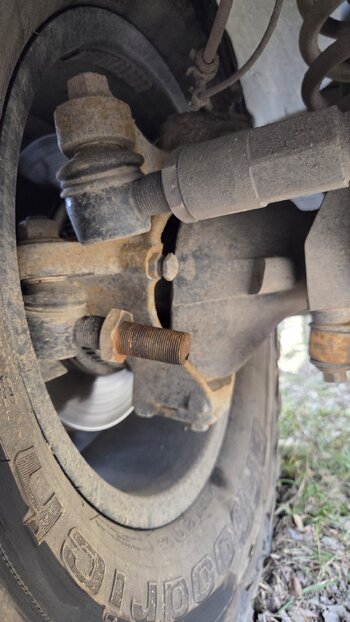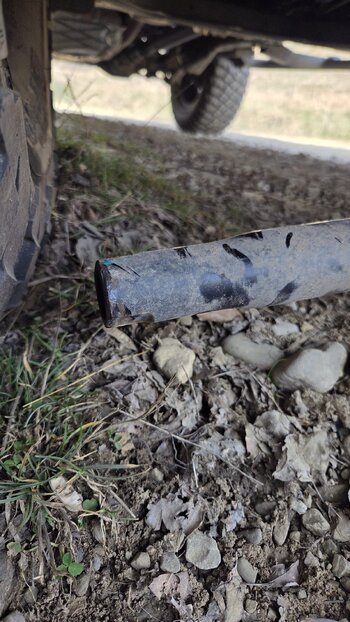

After reading on this forum about lose bolts and/or locker nuts who where on the wrong side. I found this.
A community driving the extraordinary.
Welcome to Global Grenadiers — the worldwide community for INEOS Grenadier and Quartermaster owners and enthusiasts. Register free to join the conversation. Share your build and adventures, access technical guides, join your regional social group, get help on the trail, and receive our monthly newsletter.
INEOS Agents, Dealers or Commercial vendors — please use the Contact us link at the bottom of the page.

Yep, that's how mine were. Among other loose or improperly installed components.After reading on this forum about lose bolts and/or locker nuts who where on the wrong side. I found this.
View attachment 7920386

I check my stuff too, but this really shouldn't be a thing. After having it all dealer fixed... and maybe 300 more miles on the car (I don't drive it much) I noticed the tie-rod end backing off again... which in time will have the big jam nut on the track bar moving around. The dealer marked torque with pens... I went ahead and added a small blob of blue loctite then cranked everything back down. I highly doubt it moves again but good grief.I use torque marking compound on all steering and suspension bolts/joints. This makes it very easy to do a quick glance and determine if something has come loose. If I am only driving on paved roads then the check is done once a month. If on a trip in the back country the check is done daily.
If it came loose again that is on the dealer tech for not doing his job. This should not happen but I have zero trust in dealer techs to not fudge shit up. If the nuts are fully torqued to spec Loctite is not needed. But ask any tech, if they are honest they will admit to rarely using torque wrenches.I check my stuff too, but this really shouldn't be a thing. After having it all dealer fixed... and maybe 300 more miles on the car (I don't drive it much) I noticed the tie-rod end backing off again... which in time will have the big jam nut on the track bar moving around. The dealer marked torque with pens... I went ahead and added a small blob of blue loctite then cranked everything back down. I highly doubt it moves again but good grief.

A second jam nut doesn't do much for you. The design, poor as it is will stay tight if you torque the jam nuts enough.My 46mm wrench finally arrived so I can get some torque on the big nut. I really think the correct solution is to add a second jam nut. There certainly is room for one. Wonder if we can just order the nuts?
In the meantime I’m going with blue loctite because finding the big nut walked all the way to the wrong side of the shaft was not comforting.
Maybe and an aftermarket company can offer a tie rod that has provisions to keep the nuts from loosening. I would certainly buy thar part.
If it came loose again that is on the dealer tech for not doing his job. This should not happen but I have zero trust in dealer techs to not fudge shit up. If the nuts are fully torqued to spec Loctite is not needed. But ask any tech, if they are honest they will admit to rarely using torque wrenches.
A second jam nut doesn't do much for you. The design, poor as it is will stay tight if you torque the jam nuts enough.
I can't stress enough how much I would avoid loctite on these. Corrosion will ultimately lock these up enough as it is and render the tie rod un adjustable in short order. Loctite will just exacerbate the issue and is simply unnecessary.
Early on I dealt with mine all being loose from the factory. I tightened them by hand twice and have not had an issue since. Just get them tight and move on.
You are right, but add in corrosion and things get harder. I will say the size and design make things easier to break loose than a setup like a 90's rover. Those locked up nice and solidLoctite is fine, one small dab of blue isn't making a 40+ MM nut any more difficult to break. Unless you don't have the right tools.

That is good... No clue why mine keep moving around... I'm in MA too so there is salt and garbage all over the road too. I'd imagine they're not going anywhere now with some locker on there. But yeah... when I first noticed this the large nut was all the way to the wrong side, getting those threads clean enough to even move that nut was tedious.You are right, but add in corrosion and things get harder. I will say the size and design make things easier to break loose than a setup like a 90's rover. Those locked up nice and solid
That said, I have not had to touch my jam nuts since I last set them. And I am not easy on the steering.

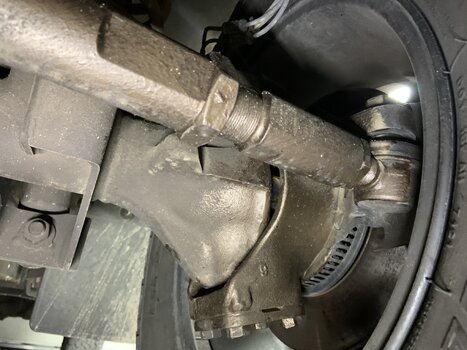
If the jam nut is not tight then you have play on the threads. This will quickly wear out the threads of the softer tie rod. As well, the stupid design of the tie rod causes the whole assembly to flop up and down if everything isn't set just right and tight.I'm wondering how this could even happen. If I compare it to my vehicle (see picture above), the lock nut on the vehicle of "Alex Adv" seems to be still in its original position. Even if it had come loose and moved outwards, that shouldn't matter. The force transmitted from the wheels to the steering rod is transferred from the external thread of the track rod end to the internal thread of the steering rod. The lock nut plays only a minor role. If it's in contact with the steering rod, there might be 10 mm more of the internal and external thread engaged, which absorbs the load, but does that really make a significant difference? Furthermore, I'm wondering how the thread of the track rod end, which was inside the steering rod, could have rusted so badly? The "hidden" end is more rusted than the exposed thread in front of it.
Since the steering rod can't rotate on its own with the track rod ends installed, I suspect the thread inside the steering rod has stripped.
How can something like this happen? Is the thread in the steering rod too soft, or were the threads already rusted when the track rod ends were installed?
Checking the steering rod for loose locknuts won't help, because this damage then can also occur with tightened locknuts.

are people getting any clunks from the tie rod, before this separation happens?
After you've tightened the jam nut, does the clunk stop?
What is the torque spec on the nuts?I think I stated somewhere else in here you really need to just look at it... Mine was just about ready to fall off and I really couldn't feel it through how dampened the steering is. I had it fixed by the dealer... it worked it way loose again. I added blue loctite and hasn't been a problem since.