The Grenadier Forum

Register a free account today to become a member! Once signed in, you'll be able to contribute to the community by adding your own topics, posts, and connect with other members through your own private inbox! INEOS Agents, Dealers or Commercial vendors please use the contact us link at the bottom of the page.

HVAC

HVAC functionality of your 2024-2025 Grennys

  • A- works well

    Votes: 9 9.4%
  • B- works adequately

    Votes: 33 34.4%
  • C- hit or miss

    Votes: 34 35.4%
  • D- generally poor

    Votes: 17 17.7%
  • E- works adequately /well after multiple dealer visits

    Votes: 3 3.1%

  • Total voters
    96
Of course when I went to take the truck in, it was working fine (got up to -16C), but they did the procedure anyway, It's in the cab so not sure why there is a coating on the terminals, but they leaned them up and the HVAC seems to be working fine.
 
As owners post their anecdotes, would you please also list your model year and build date. Would be helpful to see if this is an issue with a particular batch of vehicles or if it’s a model year issue. Thank you
 
If the issue is trapped air in the cooling system, why not use a vacuum cooling refill kit available at harbor freight or anywhere else? You hook it up to an air compressor, vacuum all the air out the system, close to system, wait a few minutes to ensure there are no leaks, and then refill with zero air. Am I missing something here?
 
If the issue is trapped air in the cooling system, why not use a vacuum cooling refill kit available at harbor freight or anywhere else? You hook it up to an air compressor, vacuum all the air out the system, close to system, wait a few minutes to ensure there are no leaks, and then refill with zero air. Am I missing something here?
Vacuum, 🤯 My memory is shocking, i keep saying pressurised, Vacuum bleed is what the IA technician told me that my dealer needed to use to get ALL the air out. Obviously they didn't as I just had to keep using until it was gone.
 
Strangely for the first time in approaching 3 years of ownership, my hvac was a little temperamental yesterday. It was blowing very hot air even with temp on coldest setting. Only way to get cold air was to press auto, then cold air straight away. Turn auto off and hot air straight away. What’s that all about. Software issues I presume. Also now have an ecall error. Batteries fully charged and 34k + miles.
 
Strangely for the first time in approaching 3 years of ownership, my hvac was a little temperamental yesterday. It was blowing very hot air even with temp on coldest setting. Only way to get cold air was to press auto, then cold air straight away. Turn auto off and hot air straight away. What’s that all about. Software issues I presume. Also now have an ecall error. Batteries fully charged and 34k + miles.
A menopausal 3 year old?
They grow up so fast these days 🤷‍♂️
 
I'll caveat this by saying I am someone who does not currently own a Grenadier but is probably buying one soon. Big issue right now for me is whether to go with a 2026 at near-retail or a 2025 with discounts.

From looking at this board and talking to Ineos dealers, the problems with the HVAC in the 2025 and prior models seem to be any one of: air pockets in the coolant lines; a faulty valve somewhere in the system; and/or software issues. The problems people have posted in this thread would indicate to me that any one of those three could be at play. Blowing hot air when the user is selecting cold air certainly does not seem like air pockets in the coolant lines, but it certainly could be caused by a faulty valve or a software issue. Conversely, blowing cold air when the user wants hot air could be caused by any of the three. And users who have reported that bleeding the air out of the system has seemingly fixed the issues obviously points to that being the cause.

From those same sources, it seems the changes in the 2026 model are: new valve; an additional fan; and/or new software. Some have said the whole HVAC system has been redesigned, which could conceivably include a re-routing of the coolant lines as to ameliorate the air pocket issue.

Thinking of it logically, the Grenadier as a model is only around 3 years old. Seems that, no matter what the 2026 changes actually are, the only reason Ineos would redesign the HVAC on a model that new is to fix issues that were plaguing the vehicle.

HVAC isn't just a comfort feature. To many, it's a safety feature, too. If you live anywhere where it regularly dips below freezing, not being able to rely on defrost to melt ice off the windshield is a big problem. Seems that dealers are fixing the issue when its present and they can diagnose it, but it also seems like Ineos knows what the problem is and have addressed it through different engineering.

The upshot is that I have a hunch it's possible for 2025 and earlier models to be refitted with the 2026 and newer HVAC, given it's the same vehicle otherwise. Would just take some parts and a software reflash to do. Whether Ineos wants to take that plunge is up to them. Could be a popular conversion that second or third owners do to these 5 to 10 years down the road.

 
I'll caveat this by saying I am someone who does not currently own a Grenadier but is probably buying one soon. Big issue right now for me is whether to go with a 2026 at near-retail or a 2025 with discounts.

From looking at this board and talking to Ineos dealers, the problems with the HVAC in the 2025 and prior models seem to be any one of: air pockets in the coolant lines; a faulty valve somewhere in the system; and/or software issues. The problems people have posted in this thread would indicate to me that any one of those three could be at play. Blowing hot air when the user is selecting cold air certainly does not seem like air pockets in the coolant lines, but it certainly could be caused by a faulty valve or a software issue. Conversely, blowing cold air when the user wants hot air could be caused by any of the three. And users who have reported that bleeding the air out of the system has seemingly fixed the issues obviously points to that being the cause.

From those same sources, it seems the changes in the 2026 model are: new valve; an additional fan; and/or new software. Some have said the whole HVAC system has been redesigned, which could conceivably include a re-routing of the coolant lines as to ameliorate the air pocket issue.

Thinking of it logically, the Grenadier as a model is only around 3 years old. Seems that, no matter what the 2026 changes actually are, the only reason Ineos would redesign the HVAC on a model that new is to fix issues that were plaguing the vehicle.

HVAC isn't just a comfort feature. To many, it's a safety feature, too. If you live anywhere where it regularly dips below freezing, not being able to rely on defrost to melt ice off the windshield is a big problem. Seems that dealers are fixing the issue when its present and they can diagnose it, but it also seems like Ineos knows what the problem is and have addressed it through different engineering.

The upshot is that I have a hunch it's possible for 2025 and earlier models to be refitted with the 2026 and newer HVAC, given it's the same vehicle otherwise. Would just take some parts and a software reflash to do. Whether Ineos wants to take that plunge is up to them. Could be a popular conversion that second or third owners do to these 5 to 10 years down the road.
Would depend on what other hardware has been relocated to allow for a redesign if true.
Have a listen to the podcasts on the forum with Stu, Krabby & Lynn Calder from IA with regards to the HVAC.
If you can get by with waiting for the HVAC to ne fixed, save your money, if you need it desperately at all times, and we have no cast iron guarantee on thos yet, spend the extra if money isn't an issue.
I bought my May 2023 model 10 months old as the saving was too good to turn down, plus I don't get the annoying clicking when I go over the speed limit which is a big bonus
 
Strangely for the first time in approaching 3 years of ownership, my hvac was a little temperamental yesterday. It was blowing very hot air even with temp on coldest setting. Only way to get cold air was to press auto, then cold air straight away. Turn auto off and hot air straight away. What’s that all about. Software issues I presume. Also now have an ecall error. Batteries fully charged and 34k + miles.
I believe the e call error can be either be reset by software or it turns itself off when fully charged. However, if it’s doesn’t and the main battery as you described is fully charged then the back up battery in the e call unit maybe failing. I read according to BMW, batteries only last 4/5 years and it can be changed by lowering the headliner near the antenna and swapping out the battery. Obviously if it’s under warranty, let Ineos sort it out.
 
I believe the e call error can be either be reset by software or it turns itself off when fully charged. However, if it’s doesn’t and the main battery as you described is fully charged then the back up battery in the e call unit maybe failing. I read according to BMW, batteries only last 4/5 years and it can be changed by lowering the headliner near the antenna and swapping out the battery. Obviously if it’s under warranty, let Ineos sort it out.
Thanks. Good info. No big deal I’ll wait for service on 30 April. After my tour of Eastern Europe and the Balkans.
 
Agreed. I had the super-hot rear condition 2-3 times over the Summer of 2024 and it was resolved by the dealer.
Tom, do you know what the dealer did specifically to fix the rear heat issue? Mine is currently at the dealer and I'm getting the "That's just the way it is" response. My rear vents only blow lava air regardless of the HVAC settings. The loaner 2025 I have does not do this at all.
 
Tom, do you know what the dealer did specifically to fix the rear heat issue? Mine is currently at the dealer and I'm getting the "That's just the way it is" response. My rear vents only blow lava air regardless of the HVAC settings. The loaner 2025 I have does not do this at all.
Sit the dealer in both vehicles and get him to repeat 'that's the way it is'. I think they are just too lazy to be bothered and IA probably don't pay much for repeated bleeding. Engine need to be cold so it takes days rather than just a quick repeat.
 
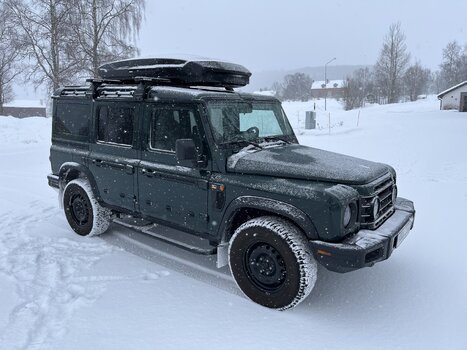
I have a 2023 diesel Fieldmaster that has covered around 15,000 kilometres in six months. It has the same issue as many others have described here: limited airflow and lukewarm air from the panel vents, but substantially more and hotter air through the back seat vents. I've also experienced issues with freezing cold air entering through the recirculation channel at the passenger's feet (my car is left-hand drive).

IMG_4702.jpeg

The car was recently taken to Hedin to have its heating system fixed. Among the actions that were carried out were vacuum pumping and system bleeding, as well as checking and cleaning four ground points. They also suggested that I start in "auto" mode and avoid making manual tweaks until the system stabilised.

IMG_4697.jpeg

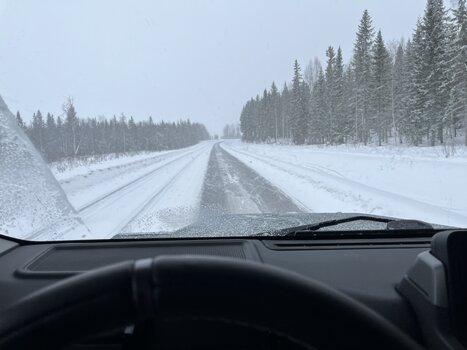
Last week, I drove about 2000 kilometres in conditions ranging from -5 to -28 degrees Celsius, and the problems persisted. Perhaps the system has a bit larger heating capacity than previously, but there are still severe flaws. I had left the car outside overnight at roughly -20 degrees Celsius when I began the trek. Even with a Webasto heater preheating, the car took about 3 hours to attain a comfortable temperature for sitting in the back seat without outerwear.

IMG_4700.jpeg
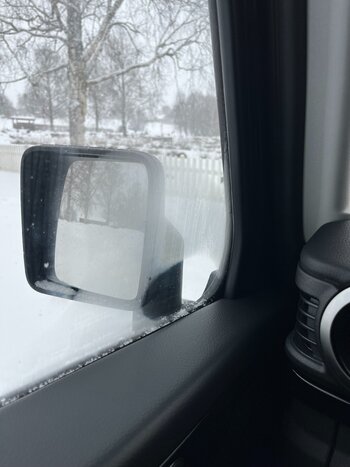
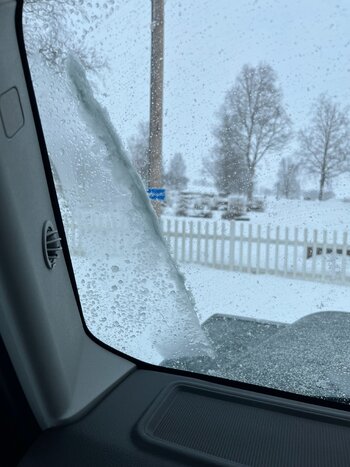
However, the problem of unheated air leaking into the passenger footwell remains. On my most recent trip, I observed that the leakage happens when the fan is set to 1 or 2, but stops when it is set to 3. Another issue is that the automated mode cannot withstand the Swedish cold. The windscreen and side windows receive insufficient ventilation, causing them to fog up on the inside or freeze on the outside.
IMG_4701.jpeg

Heating ducts for the rear footwells would also be useful in cold climates. It is impossible to direct the airflow from the back seat vents downwards sufficiently, thus the floor in the back was below freezing after more than six hours of driving.
 
Back
Top Bottom