

Even bulletproof armour doesn't stop bullets. Ask Elon how he knowsThat’s definitely where the “reliable and bulletproof” image takes a big hit.

Register a free account today to become a member! Once signed in, you'll be able to contribute to the community by adding your own topics, posts, and connect with other members through your own private inbox! INEOS Agents, Dealers or Commercial vendors please use the contact us link at the bottom of the page.
Even bulletproof armour doesn't stop bullets. Ask Elon how he knowsThat’s definitely where the “reliable and bulletproof” image takes a big hit.
We know that deep down, you are a sensitive and artistic soulim hurt.

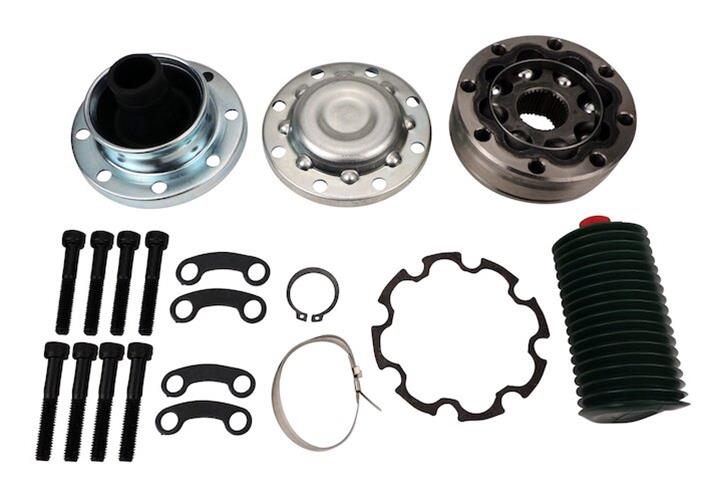
Crown already makes the same CV for under $100.Ok… we do a group buy of teraflex joints…. Like…. A lifetime supply up front. 10 each. We get a price of 100 bucks per or less, and every oil change you do your joint.

How did you make out after removing the lift? I have the same lift you have, and I'm having to replace the upper rear Rzeppa joint every 8,000 miles. I drive 1000 per week so it's pretty frequent.Have my lift removed and a new front drive shaft installed by Regal. I will give this new setup (for me, vehicle had the 1.7/1.2 lift when I bought it) a chance, but if it fails again within 10k miles and no solution has been found to the issue of CV failures, I probably will have to look at another overland vehicle.

It is at the dealership now and should be done later this week. They had to order the factory springs. I hope it'll last longer this time (the transfer case CV boot).How did you make out after removing the lift? I have the same lift you have, and I'm having to replace the upper rear Rzeppa joint every 8,000 miles. I drive 1000 per week so it's pretty frequent.
How does that one differ from the Rzeppa one they also list ($184)?Crown already makes the same CV for under $100.
Crown Automotive 68272524FRK Crown Automotive CV Joint Repair Kits | Summit Racing
Free Shipping - Crown Automotive CV Joint Repair Kits with qualifying orders of $109. Shop CV Joints at Summit Racing.www.summitracing.com


its exactly what i tried to figure out. is it just the boot or the entire joint? looked like the joint. So is crown just a cheaper version of rzeppa?How does that one differ from the Rzeppa one they also list ($184)?

While occasional failures seem to have been recorded in most markets, the leading indicator seems to be a failed boot. One early case in Australia included a failed retention circlip. Failed boot->loss of lubricant->mechanical failure appeared to me to be the sequence...its exactly what i tried to figure out. is it just the boot or the entire joint? looked like the joint. So is crown just a cheaper version of rzeppa?

Without checking your math you are 100% correct. The only part you are missing is the frequency of boot pinch based on lift height if any, terrain outside of highway or if towing heavy tongue loads. The boot pinch ultimately is the core problem on stock or lifted trucks. The shaft RPMs are the final nail.While occasional failures seem to have been recorded in most markets, the leading indicator seems to be a failed boot. One early case in Australia included a failed retention circlip. Failed boot->loss of lubricant->mechanical failure appeared to me to be the sequence...
I also wonder about driving styles:
There appears to be a higher occurrence (larger market?) in the USA
I regularly see reports by US forum members reporting cruising speeds of 75mph to 85mph or higher.
For standard 265/70/17 wheel tyre combination at 100kmh = 62 mph the wheels are rotating at approx 660rpm which with a 4.1:1 diff ratio equates to a prop shaft speed of 2700rpm
A cruising speed of 75mph increases this shaft rotation speed to 3250rpm while 85mph increases it further to approx 3700rpm.
There is an enormous deformation/torsional flex on the tight elastomer cv boot as is, due to its alignment. Increasing these stresses by a 1000rpm increase in shaft rotation at 85mph vs 62 mph surely must generate additionally significant heat and fatigue loads on the boot leading to the point of failure. This is exacerbating the existing increased stress loads induced by shaft alignment issues in vehicles with 2" suspension lifts.. where failure rates seem higher.
So.... alignment and shaft rotational speed.
Thoughts?
Thank you for the clarification, you are spot on..." boot pinch" is a far more precise descriptionWithout checking your math you are 100% correct. The only part you are missing is the frequency of boot pinch based on lift height if any, terrain outside of highway or if towing heavy tongue loads. The boot pinch ultimately is the core problem on stock or lifted trucks. The shaft RPMs are the final nail.
 and is what I had in mind when referring to "deformation /torsional flex"
I'm a bit ignorant, but isn't that only a few areas. And there are restrictions on trucks right? Again I plead serious ignorance here.I wonder how many failures have occurred in Europe , where 90-100 mph is often just the middle lane of the autoroute.
The Grenadier wouldn't be classed as aI'm a bit ignorant, but isn't that only a few areas. And there are restrictions on trucks right? Again I plead serious ignorance here.
It doesn’t. I’ll bet they are both made in the same factory in China. It’s the spare that I carry and hope to never have to installHow does that one differ from the Rzeppa one they also list ($184)?

Ok, that's kinda what I thought.Speed is policed quite agressively in Western Europe, so sustained high speeds over 80mph are unusual. Even German Autobahns are not the free-for-all often imagined.
French Autoroute from Calais to Marseilles, 130kph 1080km, nearly 11 hours. Got to slow down for the toll booths though!Ok, that's kinda what I thought.
What is the longest practical duration you could go about 75-80mph? Could you run out a full tank on a Grenadier at 80mph without stopping.
Haha, yeah done that in my younger years when I lived in Holland, driving from Rotterdam to Frejus on the route du Soleil. We always stopped in Beaune for the night.French Autoroute from Calais to Marseilles, 130kph 1080km, nearly 11 hours. Got to slow down for the toll booths though!
(On the few occasions I have done the trip, keeping to a steady 130kph is almost impossible as there is too much traffic near the major towns and the weather can be a serious hazard even in midsummer. Stopping every two hours and an overnight stop is more my scene).
So...less than crossing TexasFrench Autoroute from Calais to Marseilles, 130kph 1080km, nearly 11 hours. Got to slow down for the toll booths though!
(On the few occasions I have done the trip, keeping to a steady 130kph is almost impossible as there is too much traffic near the major towns and the weather can be a serious hazard even in midsummer. Stopping every two hours and an overnight stop is more my scene).