The Grenadier Forum

Register a free account today to become a member! Once signed in, you'll be able to contribute to the community by adding your own topics, posts, and connect with other members through your own private inbox! INEOS Agents, Dealers or Commercial vendors please use the contact us link at the bottom of the page.

Fuel Prices

Oh bloody great. Not.
1000066562.jpg
 
The regulatory and environmental hurdles as well as having to make a special fuel just for the California market has caused most manufacturers to leave the state. Fewer manufacturers and high taxes makes the fuel expensive. I've seen as high as $9.00/USg in San Francisco.

Slightly off-topic gas price discussion. tl:dr = the air quality in California has improved immensely because of our emission standards. At what point is the juice worth the squeeze?


I grew up in the San Fernando Valley (within the Los Angeles City limits. If you'd like to know what it was like, it was pretty much just like Fast Times at Ridgemont High- I was that age and doing many of those things in many of the places at the time that was filmed- it's kinda biopic.) But what that movie doesn't show was that for a good portion of the summer you couldn't see the mountains 3 miles away because of the pollution. Your eyes would burn from the ozone and I'm not kidding, we would do phys. ed. inside on some of the smoggiest days (was all knew it didn't matter- but somewhere there was a policy wonk who didn't understand science.)

1990 was the year of my escape. I haven't lived there since, but in the recent past had been spending an ever greater amount of time returning home for weeks at a time, on a monthly basis for several years to care for my elderly parents. Population density is up. Traffic is up. Insanity is up. Air pollution is down. On a super anecdotal level level, I'd say 90% of the summer days are 90% better air quality. Sure, there are inversion layers and other weird weather phenomena, but the difference is a stark improvement from 40 years ago.

We can discuss the finer details of gas formulae, taxes, smog checks (the colloquial name for emissions testing requirements) and all of California Air Resources Board, Bay Area Air Quality Management District and South Coast Air Quality Management District if you'd like, because I also have my grievances... but the proof is in the pudding.

The big question is; "is the reduction in pollution worth the money we pay?"
My next one would be "at what point are we paying more for diminishing returns?" As they say, perfect is the enemy of good.

Here's what we pay in taxes on gasoline:
State Excise tax: 61.2 cents/gal (16.2 c/l)
Federal Excise tax: 18.4 cents/gal (4.9 c/l)
Cap and Trade: "about 25" cents/gal (6.7 c/l)
Sales Tax: 2.25% plus local taxes (10.25% in my little city)
Underground storage tank cleanup fee: "about 2" cents/gal. (0.5 c/l)

Edit:
Just for fun... A gallon of 91 octane costs $6.79 locally. Before taxes and fees (sales tax would be 64 c/gallon) it's $5.09-ish.
 
Last edited:
Slightly off-topic gas price discussion. tl:dr = the air quality in California has improved immensely because of our emission standards. At what point is the juice worth the squeeze?
.
I don't mean to argue the effectiveness of what California has done to improve air quality only the financial costs. There is no doubt that the air quality is significantly better than it has been in 100 years.

I think the same can be said of every metropolitan area in the US. Id be curious if the slightly more stringent California standards have shown a measurable improvement over the federal standards. It could also be questioned if the federal standards would have progressed as they have without California leading the way.

California does somethings really well and somethings really poorly. Their fault seems to be an unwillingness to objectively learn from any of them. They seem to just charge ahead with anything that sounds like a good idea.
 
I don't mean to argue the effectiveness of what California has done to improve air quality only the financial costs. There is no doubt that the air quality is significantly better than it has been in 100 years.

I think the same can be said of every metropolitan area in the US. Id be curious if the slightly more stringent California standards have shown a measurable improvement over the federal standards. It could also be questioned if the federal standards would have progressed as they have without California leading the way.

California does somethings really well and somethings really poorly. Their fault seems to be an unwillingness to objectively learn from any of them. They seem to just charge ahead with anything that sounds like a good idea.

I also wonder if the advent of the "50-state" car contributed elsewhere. It's gotta be cheaper to make only one version.

I'm just going to emphasize what you said here:

They seem to just charge ahead with anything that sounds like a good idea.
 
I recall from my time working in LA (El Segundo) 20 years ago was the LA basin is impacted by the inflow of sea fog coming off the cold Pacific to the west, and blocked from the east by the San Bernardino and San Gabriel ranges with warm rising air generated by the Mojave Desert behind that. The effect being the entrapment and recirculation of air over LA County including whatever pollutants had been emitted from the heavily urbanised areas. It became the native habitat for Toyota Prius.

California had to do something about that. It's worked but at a heavy cost.
 
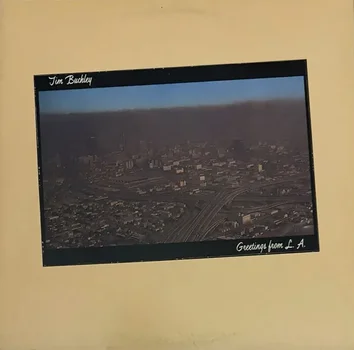
Jeff Buckley's dad. Great 70s album from a place that looks like modern Delhi.
 

Attachments

  • tim-buckley-greetings-from-l_a-Cover-Art.webp
    tim-buckley-greetings-from-l_a-Cover-Art.webp
    18.7 KB · Views: 0
& virtually all of Tasmania's fuel.

"
The risk of accidents increases when refineries run at full capacity, according to MST Financial’s head of energy research Saul Kavonic.

“We are running our refineries really hard at the moment, which can raise the risk profile of accidents or things not going quite to plan,” Mr Kavonic told news.com.au.

Local fire authorities have confirmed that equipment failure caused the blaze at the refinery, which supplies 10 per cent of Australia’s fuel and 50 per cent of the fuel used in Victoria."
 
Jeff Buckley's dad. Great 70s album from a place that looks like modern Delhi.

While the image looks bad I can assure you it was often worse. At times you couldn't see 300 yards down the street. On top of it all was the fact that the smog was also full of lead.
 
While the image looks bad I can assure you it was often worse. At times you couldn't see 300 yards down the street. On top of it all was the fact that the smog was also full of lead.
1000066570.jpg
 
The local gas and diesel prices droped in germany the last week.

converted in AUS $ we´re sitting at 3,42$ a Liter for Super and 3,54$ for Diesel.

converted to US $ and gallons its 9,62$ a Gallon 98 and 10$ for the gallon of Diesel.

Since i´m a contractor besides the Diesel the massive spike in everything plastic like pipes and geogrid(Prices almost doubeld if availeble), and Tarmac ..hits my wallet..
I have several municipal maintenace contracts and work for the utility companies, and the prices are kinda fixed untill those got renewed.
 
Back
Top Bottom